


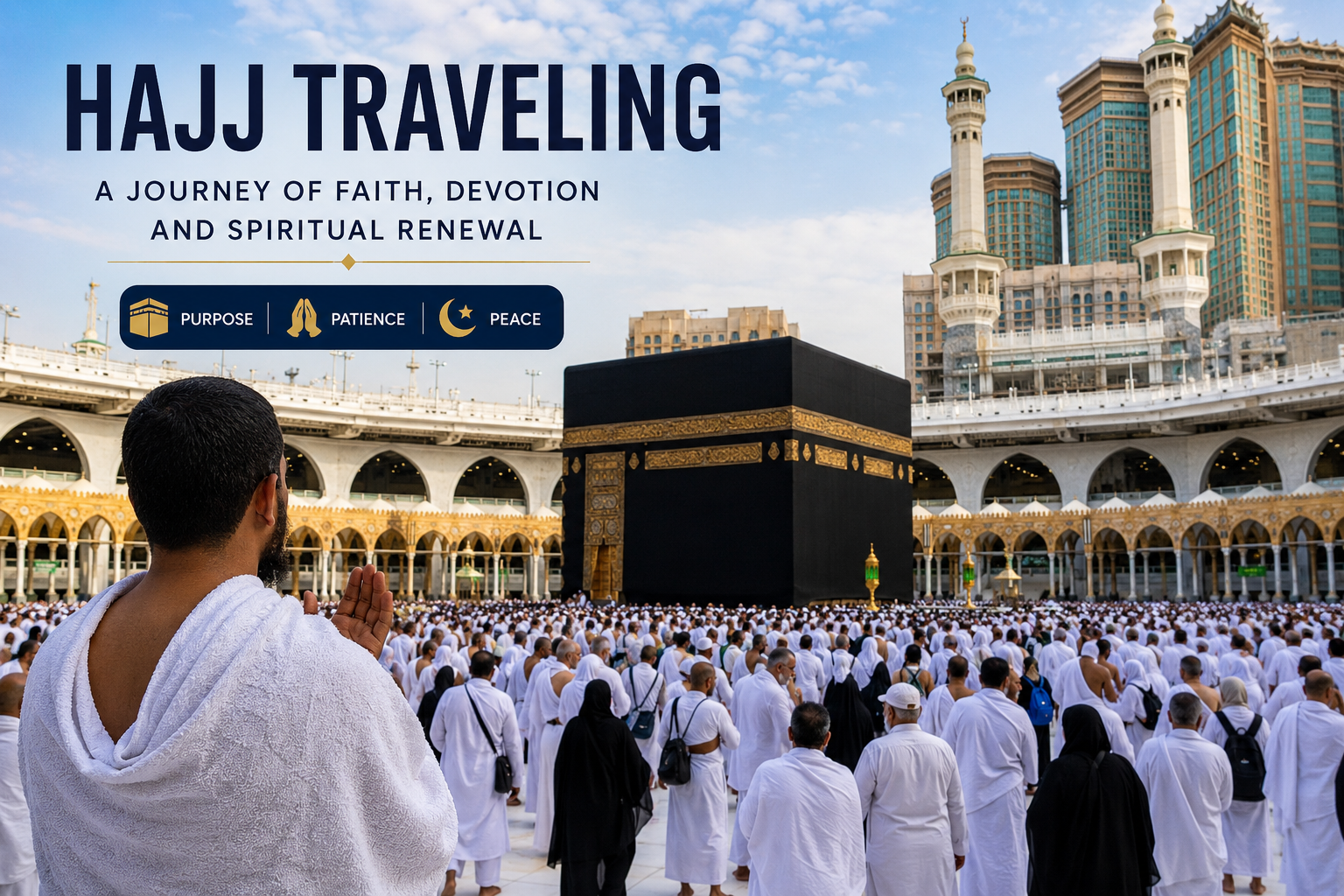
Introduction to Hajj Traveling
Hajj Traveling is one of the most significant journeys a Muslim can undertake. Every year, millions of Muslims from around the world travel to the holy city of Makkah in Saudi Arabia to perform Hajj, one of the Five Pillars of Islam. This spiritual pilgrimage is not only a religious obligation for eligible Muslims but also a life-changing experience that strengthens faith and unity among believers.
Planning for Hajj Traveling requires careful preparation, understanding of religious rituals, and awareness of travel requirements. Whether you are traveling for the first time or helping someone prepare for the pilgrimage, having the right information can make the journey smoother and more meaningful.
What Is Hajj?
Hajj is an annual Islamic pilgrimage to Makkah that takes place during the Islamic month of Dhul Hijjah. Every Muslim who is physically and financially capable is required to perform Hajj at least once in their lifetime.
Hajj Traveling involves visiting several sacred sites, including the Grand Mosque in Makkah, Mina, Arafat, and Muzdalifah. Pilgrims perform a series of rituals that commemorate the actions of Prophet Ibrahim (AS), his wife Hajar, and their son Ismail (AS).
The Importance of Hajj Traveling
Hajj Traveling is more than just a physical journey. It is a spiritual experience that allows Muslims to seek forgiveness, strengthen their relationship with Allah, and connect with fellow believers from different cultures and backgrounds.
The pilgrimage teaches patience, humility, sacrifice, and gratitude. During Hajj Traveling, pilgrims wear simple clothing known as Ihram, symbolizing equality before Allah regardless of social status, nationality, or wealth.
Preparing for Hajj Traveling
Obtain a Valid Hajj Visa
One of the first steps in Hajj Traveling is securing the necessary visa. Saudi Arabia issues special Hajj visas through authorized travel agencies and approved operators.
Pilgrims should ensure that all travel documents are valid and meet the latest requirements set by Saudi authorities.
Physical Preparation for Hajj Traveling
Hajj involves extensive walking, standing, and movement between holy sites. Therefore, physical fitness is important for successful Hajj Traveling.
Pilgrims are encouraged to:
- Walk regularly before departure
- Maintain a healthy diet
- Stay hydrated
- Consult a healthcare professional if they have medical conditions
Financial Planning
Since Hajj Traveling can be expensive, budgeting is essential. Costs may include:
- Visa fees
- Airfare
- Accommodation
- Transportation
- Meals
- Travel insurance
Early planning often helps reduce expenses and ensures better travel arrangements.
Essential Items for Hajj Traveling
Packing wisely can improve comfort during the pilgrimage. Some important items include:
- Passport and travel documents
- Ihram clothing
- Comfortable walking shoes
- Personal hygiene products
- Prescription medications
- Water bottle
- Prayer mat
- Power bank
- Lightweight backpack
Proper preparation helps pilgrims focus on worship rather than logistical challenges during Hajj Traveling.
Key Rituals During Hajj Traveling
Entering the State of Ihram
Before reaching Makkah, pilgrims enter the sacred state of Ihram. This marks the beginning of the spiritual journey and involves specific intentions and dress requirements.
Tawaf Around the Kaaba
One of the most memorable parts of Hajj Traveling is performing Tawaf, which involves circling the Kaaba seven times in a counterclockwise direction.
Pilgrims recite prayers and supplications while expressing devotion to Allah.
Sa’i Between Safa and Marwah
Pilgrims walk seven times between the hills of Safa and Marwah, commemorating Hajar’s search for water for her son Ismail.
This ritual highlights faith, perseverance, and trust in Allah.
Standing at Arafat
The Day of Arafat is considered the most important day of Hajj. Pilgrims gather on the Plain of Arafat for prayer, reflection, and repentance.
Many Muslims consider this moment the spiritual peak of Hajj Traveling.
Overnight Stay in Muzdalifah
After sunset, pilgrims travel to Muzdalifah where they spend the night under the open sky and collect pebbles for the next ritual.
Stoning the Jamarat
Pilgrims throw pebbles at symbolic pillars representing Satan. This act signifies rejecting temptation and reaffirming commitment to Allah.
Animal Sacrifice and Eid al-Adha
A sacrifice is performed to commemorate Prophet Ibrahim’s willingness to obey Allah’s command. This ritual is closely associated with the celebration of Eid al-Adha.
Challenges During Hajj Traveling
Large Crowds
Millions of pilgrims gather in a limited area, making crowd management an important aspect of Hajj Traveling.
Pilgrims should remain patient, follow official instructions, and stay with their designated groups.
Weather Conditions
Saudi Arabia often experiences high temperatures during Hajj season. Pilgrims should:
- Drink plenty of water
- Use umbrellas when permitted
- Wear appropriate clothing
- Avoid unnecessary exposure to direct sunlight
Fatigue and Physical Strain
The demanding nature of Hajj Traveling can cause exhaustion. Adequate rest and proper nutrition help maintain energy levels throughout the pilgrimage.
Health and Safety Tips for Hajj Traveling
Stay Hydrated
Drinking water regularly is crucial, especially in hot weather.
Follow Medical Advice
Pilgrims with existing health conditions should carry necessary medications and consult healthcare providers before departure.
Practice Good Hygiene
Maintaining cleanliness reduces the risk of illness during Hajj Traveling.
Keep Emergency Contacts
Always carry contact information for travel organizers, accommodation providers, and family members.
Technology and Modern Hajj Traveling
Modern technology has significantly improved the Hajj experience. Mobile applications help pilgrims with:
- Navigation
- Prayer times
- Ritual guidance
- Transportation information
- Emergency assistance
Digital tools make Hajj Traveling more organized and accessible for pilgrims from around the world.
Benefits of Hajj Traveling
Spiritual Renewal
Many pilgrims return home feeling spiritually refreshed and closer to Allah.
Global Muslim Unity
Hajj Traveling brings together Muslims from every continent, demonstrating the unity of the Islamic community.
Personal Growth
The journey teaches discipline, patience, gratitude, and compassion.
Increased Religious Knowledge
Pilgrims often gain a deeper understanding of Islamic teachings and history through firsthand experiences.
Tips for First-Time Pilgrims
- Learn Hajj rituals before departure.
- Attend educational seminars.
- Travel with a reputable Hajj operator.
- Keep important documents secure.
- Remain patient during crowded situations.
- Focus on worship and spiritual growth.
Following these recommendations can make Hajj Traveling a more fulfilling and rewarding experience.
Conclusion
Hajj Traveling is a profound spiritual journey that holds immense significance in Islam. It represents devotion, sacrifice, unity, and submission to Allah. Proper planning, physical preparation, and understanding of the rituals can help pilgrims complete their pilgrimage successfully.
For millions of Muslims, Hajj Traveling is the journey of a lifetime—an opportunity to strengthen faith, seek forgiveness, and experience the powerful sense of unity that defines the global Muslim community. By preparing carefully and embracing the spiritual purpose of the pilgrimage, every pilgrim can make the most of this sacred and unforgettable experience.
