


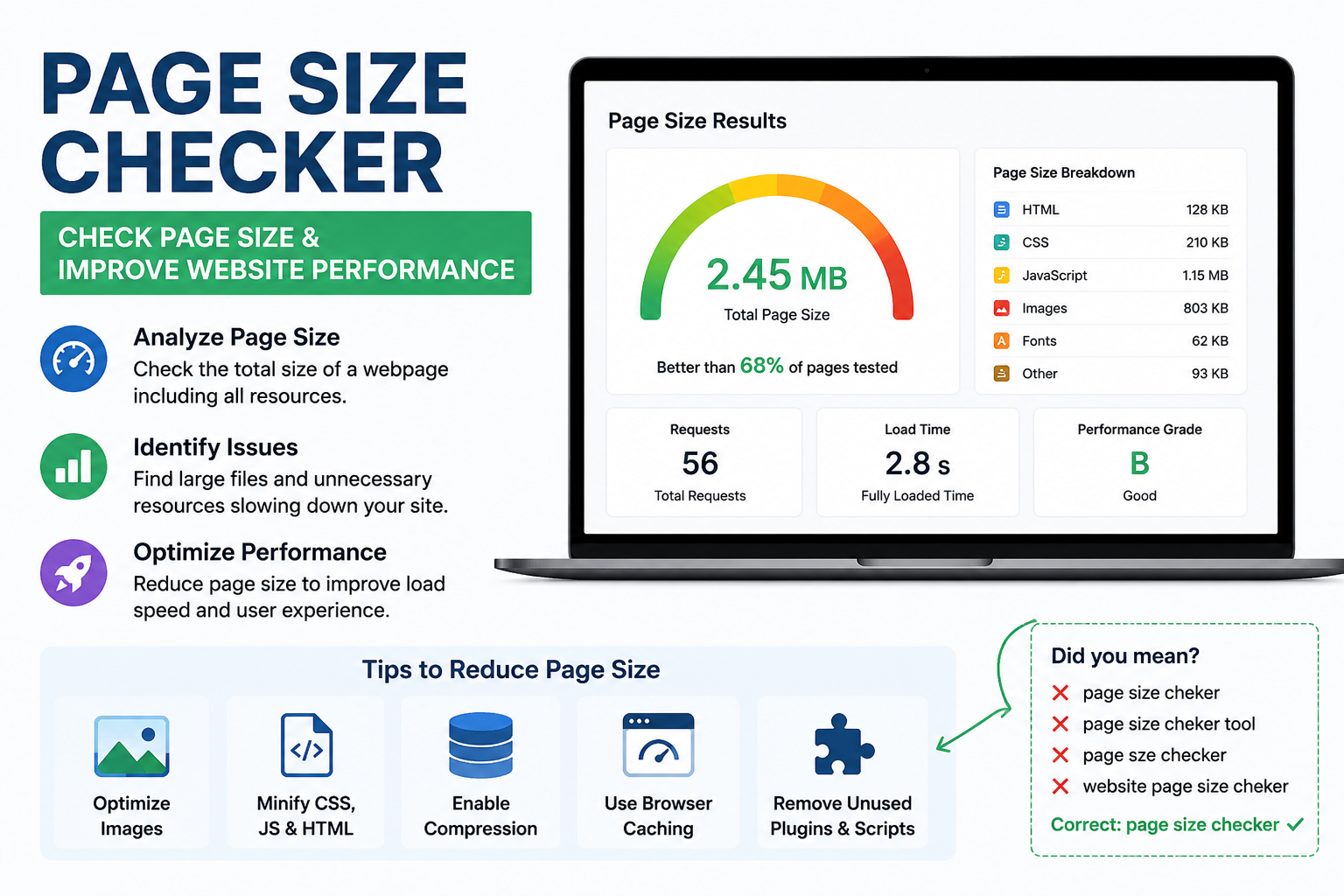
Introduction
Website performance plays a crucial role in modern search engine optimization. Search engines and users alike expect websites to load quickly, function smoothly, and provide an excellent browsing experience. One of the most important performance metrics is page size, which directly affects loading speed, user engagement, and search rankings.
When webmasters and SEO professionals analyze website performance, they often rely on specialized tools. However, many users search for tools using incorrect terms, leading to what is commonly known as a page size checker spellmistake. These spelling errors may seem minor, but they can affect how users find resources, interpret data, and perform website audits.
This article explores the causes of a page size checker spellmistake, its impact on SEO workflows, and best practices for accurately measuring and optimizing page size.
What Is a Page Size Checker Spellmistake?
A page size checker spellmistake refers to an incorrect spelling or variation used when searching for page size analysis tools online.
Examples include:
- Page size cheker
- Page sze checker
- Page size cheker tool
- Website page size cheker
- Page weight cheker
Although search engines are increasingly capable of understanding misspellings, incorrect terms can sometimes result in confusion or inaccurate tool selection.
For SEO professionals, using the correct terminology ensures efficient research and access to reliable resources.
Why Page Size Matters in Website Performance
Before discussing a page size checker spellmistake further, it is important to understand why page size itself matters.
Page size refers to the total amount of data required to load a webpage. This includes:
- HTML files
- CSS stylesheets
- JavaScript files
- Images
- Videos
- Fonts
- Third-party scripts
Larger pages typically require more time to load, especially on slower internet connections.
Impact on User Experience
Visitors expect websites to load quickly.
Research consistently shows that:
- Faster websites have lower bounce rates.
- Users spend more time on responsive websites.
- Slow-loading pages reduce conversion rates.
As page size increases, performance often decreases.
Impact on SEO
Google has repeatedly emphasized page speed as an important ranking factor.
Benefits of optimized page size include:
- Better Core Web Vitals
- Improved mobile performance
- Enhanced crawl efficiency
- Stronger user engagement signals
These factors contribute to overall search visibility.
Common Causes of Page Size Checker Spellmistake Searches
Many users unknowingly make a page size checker spellmistake when looking for performance analysis tools.
Typing Errors
The most common reason is simple human error.
Examples include:
- Missing letters
- Extra letters
- Incorrect word order
- Keyboard slips
Lack of Technical Knowledge
Beginners may not fully understand technical SEO terminology.
As a result, they often search for approximate terms rather than precise phrases.
Mobile Device Searches
Typing on smartphones increases the likelihood of spelling mistakes.
Auto-correct can also introduce unintended errors.
Language Differences
Non-native English speakers may spell technical terms differently, creating variations that search engines must interpret.
How Search Engines Handle Page Size Checker Spellmistake Queries
Modern search engines have become highly sophisticated in understanding user intent.
When someone enters a page size checker spellmistake, search engines often display results for the intended query rather than the exact wording.
Query Correction Systems
Google and other search engines use:
- Machine learning
- Natural language processing
- Historical search data
These technologies help identify probable corrections.
Suggested Searches
Users often see messages such as:
“Showing results for page size checker.”
This feature helps users quickly reach relevant information despite spelling errors.
Semantic Understanding
Search engines increasingly focus on meaning rather than exact keyword matches.
This improves search accuracy even when spelling mistakes occur.
Best Tools for Checking Website Page Size
Avoiding a page size checker spellmistake starts with understanding which tools are available.
Popular page size analysis tools include:
Google PageSpeed Insights
Features:
- Performance analysis
- Core Web Vitals data
- Mobile and desktop testing
- Optimization recommendations
GTmetrix
Provides:
- Detailed waterfall reports
- Performance scoring
- Page size breakdowns
- Loading time analysis
WebPageTest
Offers advanced testing capabilities for developers and SEO specialists.
Pingdom Website Speed Test
Useful for:
- Monitoring load times
- Identifying large assets
- Evaluating performance bottlenecks
Each tool provides unique insights into page size and loading performance.
How Large Page Sizes Affect SEO Rankings
A page size checker spellmistake may seem harmless, but overlooking page size itself can lead to significant SEO issues.
Slower Loading Speeds
Large pages require more resources to load.
This can result in:
- Longer wait times
- Increased bounce rates
- Reduced user satisfaction
Poor Mobile Experience
Mobile users often access websites through slower connections.
Excessive page size creates a negative experience on smartphones and tablets.
Reduced Crawl Efficiency
Search engine bots allocate limited crawl resources to websites.
Heavy pages consume more crawl budget, potentially affecting indexation.
Lower Conversion Rates
Website performance directly influences revenue.
Even small delays can reduce:
- Form submissions
- Product purchases
- Lead generation
Practical Ways to Reduce Page Size
Website owners can significantly improve performance by implementing several optimization techniques.
Compress Images
Images are often the largest contributors to page size.
Best practices include:
- Using WebP format
- Compressing images
- Resizing oversized files
Minify CSS and JavaScript
Removing unnecessary code reduces file size and improves loading speed.
Enable Browser Caching
Caching allows returning visitors to load pages more efficiently.
Remove Unused Plugins
Excessive plugins frequently increase page size and slow performance.
Optimize Fonts
Using fewer font families and weights can reduce resource requirements.
How SEO Professionals Avoid Page Size Checker Spellmistake Issues
Experienced professionals minimize errors by following structured workflows.
Bookmark Trusted Tools
Rather than searching repeatedly, professionals save trusted tools for quick access.
Use SEO Toolkits
Platforms like Ahrefs, Semrush, and Screaming Frog often integrate performance-related insights.
Follow Standard Terminology
Using accepted SEO terminology reduces confusion and improves communication.
Maintain Documentation
Keeping documented audit procedures ensures consistency across projects.
Page Size Optimization Best Practices for 2026
As websites become increasingly complex, page size management remains essential.
Recommended practices include:
- Monitor performance regularly.
- Optimize images before uploading.
- Limit third-party scripts.
- Use modern compression formats.
- Test pages after major updates.
- Monitor Core Web Vitals.
- Conduct monthly performance audits.
These habits help maintain strong website performance over time.
Conclusion
A page size checker spellmistake may appear insignificant, but it highlights a broader challenge within SEO and website optimization: the need for accurate tools, terminology, and analysis. While search engines can often correct spelling mistakes automatically, understanding the correct concepts ensures more effective performance audits and optimization strategies.
Page size remains one of the most important factors affecting website speed, user experience, and search visibility. By using trusted analysis tools, following optimization best practices, and regularly monitoring performance, website owners can create faster, more efficient websites that satisfy both users and search engines.
FAQ Section
1. What is a page size checker?
A page size checker is a tool that measures the total size of a webpage, including images, scripts, stylesheets, and other resources.
2. Can a page size checker spellmistake affect search results?
Usually not significantly, as modern search engines often correct spelling mistakes automatically.
3. Why is page size important for SEO?
Page size impacts loading speed, user experience, crawl efficiency, and overall search rankings.
4. What is an ideal webpage size?
There is no fixed standard, but smaller, optimized pages generally perform better than excessively large pages.
5. Which tool is best for checking page size?
Google PageSpeed Insights, GTmetrix, WebPageTest, and Pingdom are among the most trusted options.
10 Related Keywords
- page size checker tool
- website page size analyzer
- page speed optimization
- website performance checker
- page load speed
- Core Web Vitals
- website optimization tools
- GTmetrix analysis
- page weight checker
- website speed audit
5 Image Suggestions with Alt Text
1. Website Performance Dashboard
Alt Text: Website performance dashboard showing page size analysis results.
2. SEO Expert Reviewing Page Speed Report
Alt Text: SEO specialist analyzing website page size and speed metrics.
3. GTmetrix Performance Test Screen
Alt Text: Detailed website performance report with page size breakdown.
4. Website Optimization Workflow
Alt Text: Step-by-step website optimization process for improving page speed.
5. Mobile Website Speed Testing
Alt Text: Mobile device displaying page speed and performance testing results.
